
Wearables with evidence in the guidelines
Smartwatches with clinical PPG and ECG functions are evolving from a lifestyle gadget to a serious screening tool for atrial fibrillation in high-risk patients.
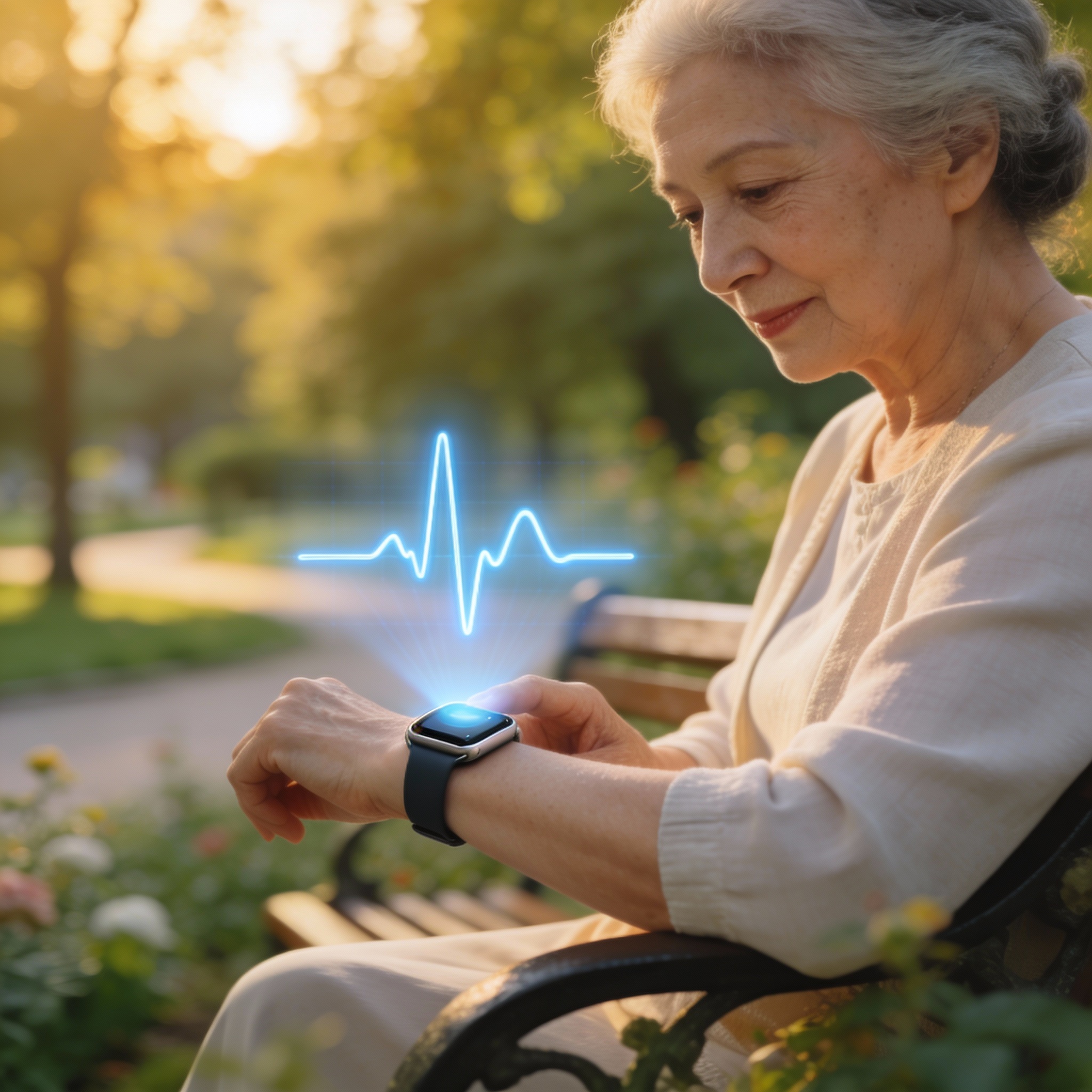
Smartwatches with clinical photoplethysmography (PPG) and electrocardiogram (ECG) functions are evolving from a lifestyle gadget to a serious screening tool for atrial fibrillation in high-risk patients.
A practical example: A patient at high risk of stroke, monitored via smartwatch for 3 weeks, is diagnosed with asymptomatic atrial fibrillation — previous anticoagulation, potentially prevented stroke.
Four times higher detection rate — why that counts
In the Amsterdam University Medical Centre (AMC) randomized EQUAL trial with 437 high-risk patients, 7.3% of the smartwatch group were diagnosed with new atrial fibrillation over 6 months — versus 2.3% in standard care. The hazard ratio (HR) of 4.40 (95% confidence interval [CI] 1.66—11.66) is statistically significant. More than half of the cases were asymptomatic and would probably not have been recorded by the usual 24-hour electrocardiogram (24-hour ECG).
From guideline to implementation
As early as 2021, the German Society of Cardiology (DGK) recommended systematic wearable-based screening from 75 years of age and for obstructive sleep apnea (OSA); opportunistically from 65 years of age with arterial hypertension. The new EQUAL data reinforces this position by showing that smartwatch screening in patients with an increased stroke risk stratification score leads to earlier diagnosis under everyday conditions — an important basis for regulatory treatment decisions and health technology assessment (HTA) processes.
Clinical benefits and technical limits
Smartwatches with PPG rhythm analysis and on-demand single-channel ECG offer scalable, remote-assisted atrial fibrillation (AF) screening. However, in the Amsterdam study, only around half of the smartwatch alarms actually confirmed atrial fibrillation — an important point for post-market surveillance (PMS) and risk management files (RMF). DGK experts therefore emphasize: Wearables should be used specifically for risk groups (e.g. unexplained stroke, suspected arrhythmia), while heart rate and activity tracking should be the focus of healthy users.
Source: Journal of the American College of Cardiology. Smartwatch use enhances the detection of heart arrythmias in high-risk patients. EurekAlert! January 21, 2026.
Demonstrate the medical benefits of your product
With our many years of experience and expertise, we offer effective solutions to show the medical benefits of your product.
From conception to implementation of preclinical and clinical studies, we support you with tailor-made services.
Find out how MEDIACC can help you get your products refunded.