
PMCF is just every study of my CE-certified medical device, and they're always the same, right?
Not every study involving a CE-marked medical device is automatically a PMCF study. The intended purpose, the study's research question, and its specific design according to MDR and MPDG are crucial.
What truly constitutes a "classic" PMCF study?
PMCF (Post-market clinical follow-up) is part of post-market surveillance and serves to systematically update the clinical evaluation of an already CE-marked product within its intended purpose. PMCF studies are one way manufacturers proactively collect clinical data from real-world use as part of a PMCF plan to confirm safety, performance, and the benefit-risk ratio throughout the product lifecycle.
Typical triggers for a PMCF study include relevant data gaps in the clinical evaluation, new or rare risks, high clinical or economic importance of the product, complex conditions of use, or anticipated changes in the healthcare context (e.g., new reimbursement requirements). PMCF studies are conducted with the CE-marked product within its existing intended purpose and are guided by the objectives, methods, and endpoints defined in the PMCF plan.
Other studies involving CE-marked products are not automatically PMCF studies
The MDR distinguishes between clinical investigations conducted before market entry (e.g., to obtain or extend CE marking according to Article 62 MDR), post-market clinical investigations (e.g., PMCF studies according to Article 74 MDR), and "other clinical investigations" involving CE-marked products. A clinical investigation involving a CE-marked product that includes a new indication, an extended intended purpose, or additional burdensome or invasive procedures no longer falls under the pure PMCF logic but can be classified regulatorily almost like a "normal" clinical investigation.
In Germany, certain other clinical investigations involving CE-marked products – for example, if they strictly remain within the intended purpose and do not involve additional invasive or burdensome procedures – may be exempt from the approval requirement by a federal higher authority, but still always require a favorable consultation by an ethics committee. Such studies can provide important clinical data, but regulatorily they are not automatically PMCF studies; rather, they are part of clinical research involving CE-marked products in a broader sense. This can be reflected in an appropriate study design.
Why every PMCF study looks different
Even two studies that are formally both PMCF studies can differ significantly in content. Key factors include the product's intended purpose and risk class, the affected indication, standard of care and competitive environment, the claimed performance or therapeutic promise, national reimbursement rules, and payer requirements. Additionally, the maturity of clinical evidence from previous clinical evaluations, the type and size of identified evidence gaps, assumed or already measured effect sizes, the safety profile, and known or suspected rare side effects play a role.
From a regulatory perspective, these factors must be systematically addressed in the PMCF plan to justify the type, design, endpoints, and data collection methods of a PMCF study. For other studies involving CE-marked products – for example, for a new intended purpose or with additional burdensome procedures – the requirements for clinical investigations or other clinical investigations apply, including the relevant notification or approval obligations with ethics committees and authorities.
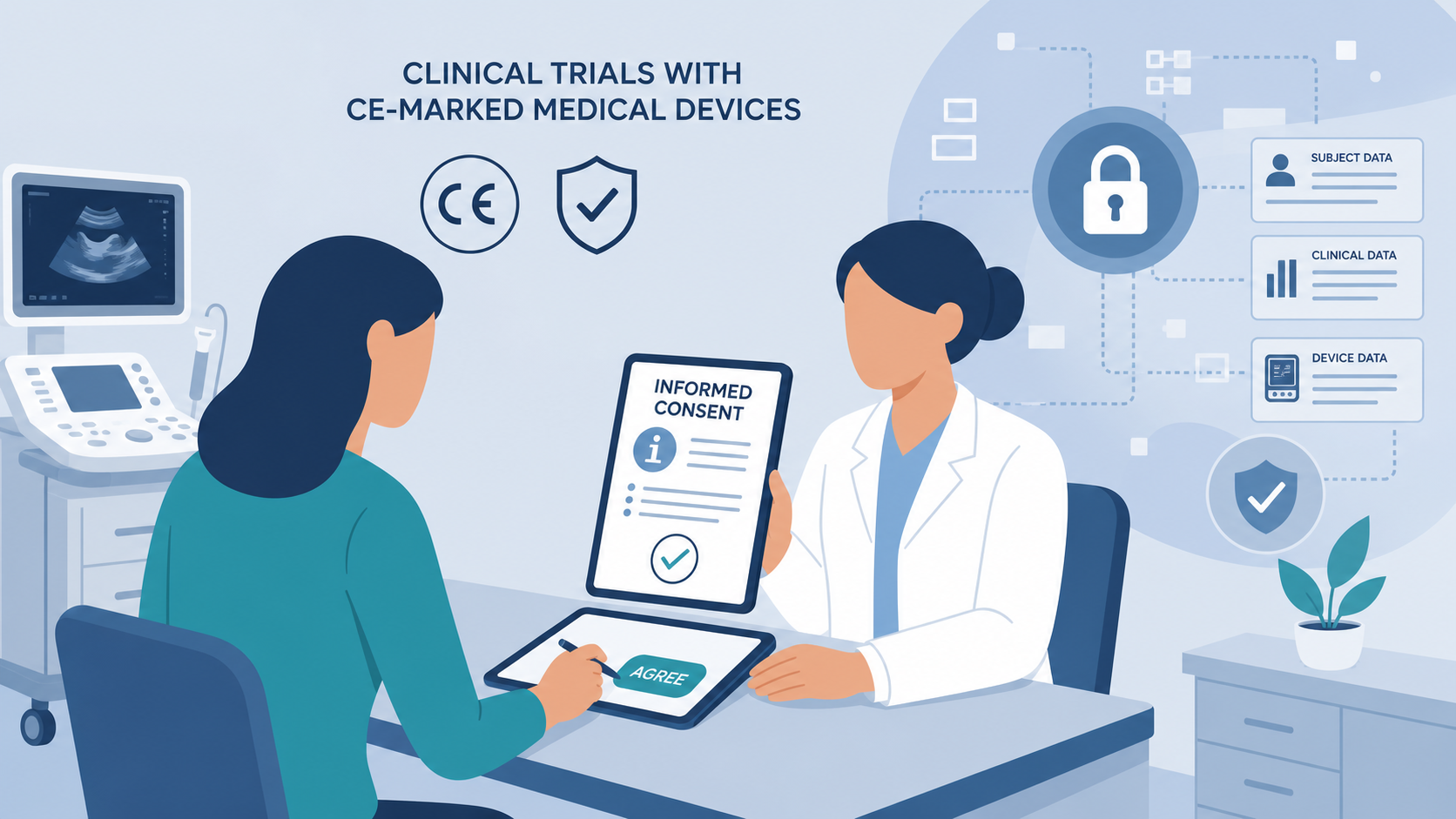
Regardless of whether an ethics committee must formally approve, the following applies: The right of subjects and patients to physical and mental integrity, privacy, and the protection of personal data must be respected. For every study or data use where patients are identifiable or their data is processed for research or PMCF purposes, informed consent after adequate explanation is therefore required; it is voluntary and can be withdrawn at any time. Research projects where individual consent is not practicable may only be carried out after evaluation and approval by an ethics committee if identifiable materials or data are used. Furthermore, when a medical device is used as part of medical treatment, patients must be correctly informed about its use, risks, and, if applicable, alternatives.
Do you require early consultation on your PMCF, drawing on years of experience and expertise? Feel free to arrange a non-binding consultation with us!
Show the medical benefits of your product
With our many years of experience and expertise, we offer effective solutions to demonstrate the medical benefits of your product.
From the conception to the execution of preclinical and clinical investigations, we support you with customized services.
Find out how MEDIACC can help you achieve reimbursability for your products.