
European Health Data Space (EHDS) — for clinical evidence generation
With the European Health Data Space (EHDS), a uniform legal and technical framework has been created across the Union for the processing, access, exchange and reuse of electronic health data and as a central component of the European Health Union.
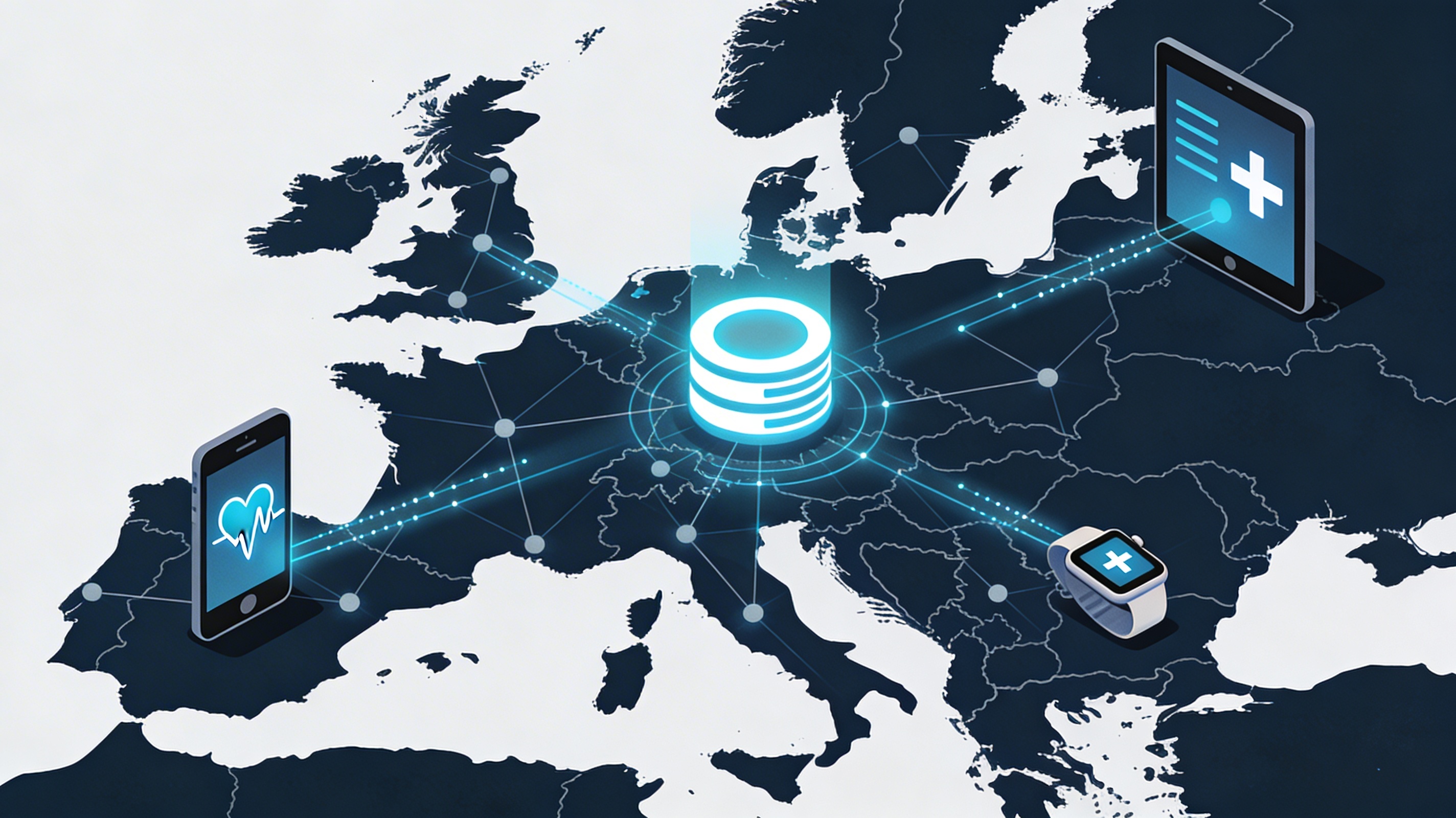
The aim of the EHDS is to strengthen patients' access to their health data, improve sectoral and cross-border care, and make health data systematically usable for research, innovation, policy making and patient safety.
Regulation (EU) 2025/327 on the European Health Data Space comes into force on March 26, 2025, but its requirements will mostly only apply from March 26, 2027. The Member States therefore have in principle two years of implementation and preparation before central obligations for the primary and secondary use of electronic health data become binding.
What is the aim of the EHDS?
What types of data does the EHDS apply to?
HDS applies to electronically processed health data (personal and non-personal) from the health and research context, but is limited to “health data” in the narrower sense and does not include any use of data. It is crucial that the data is available electronically and is health-related; this is when the EHDS rules apply for primary and/or secondary use.
Types of data for which EHDS applies:
- Electronic health records and routine data: patient brief records, doctor's letters, discharge reports, imaging and findings, laboratory reports, e-prescriptions and e-dispensations, billing and reimbursement data for care.
- Research and registry data: Data from completed clinical trials/trials, health care research, cohorts, registries, biomedical registries (e.g. cancer registries), biobanks and health research surveys following initial publication.
- Omics” and specialized data: genetic and other omics data, biobank related data sets, data from medical devices and health-related digital health/wellness applications.
Types of data that are (typically) not covered by the EHDS
- Non-electronic data: Purely paper-based or otherwise not electronically recorded health information that is not transferred to electronic systems.
- Non-health data: Non-health-related data, such as general company data, purely technical log files without a health context, or classic marketing/advertising data unrelated to health services.
- Data outside the EHDS purpose: Uses that are expressly prohibited, e.g. use of health data for discrimination, individualised advertising in the health sector or to develop harmful products; such purposes are also prohibited for data collected by the EHDS per se.
What does primary use mean and what does it refer to?
Electronic health data holders (e.g. hospitals, health insurance companies, registers, research institutions, and in some cases also manufacturers) must meet extensive access, documentation and quality requirements under the EHDS Regulation. For many obligations, this is done via the Health Data Access Bodies (HDAB) and secure processing environments.
What does secondary use mean and what does it apply to?
- Secondary use means the use of electronic health data outside of direct patient care, for example for research, innovation, statistics, policy making, health technology assessment (HTA) or training and testing algorithms in medical devices, IVD, AI systems and digital applications.
To this end, national HDABs accept and review applications for cross-border use of electronic health data for research, innovation, statistical or regulatory purposes and the issuance of data access permits (“data permits”). They should act as supervisory and coordinating bodies, create uniform procedures, promote cooperation between data owners and users and thus contribute to trust and legal certainty.
Ggovernance, data protection and security
When does the EHDS apply?
Regulation (EU) 2025/327 on the European Health Data Area comes into force on March 26, 2025, but its requirements will mostly only apply from March 26, 2027. and gradually expand the priority data groups until 2031. The Member States therefore have in principle two years of implementation and preparation period before central obligations for primary and secondary use of electronic health data become binding.
For Germany, electronic health records in particular are being positioned as a central access point; at the same time, the Federal Government is examining the need for adjustments in order to integrate care, research and innovation with EHDS at an early stage and to make opt-out mechanisms (e.g. from DigiG/GDNG) compatible
What does this mean for researching companies?
EHDS creates an EU framework with which care data can be used systematically and legally in a legally secure manner for clinical research and evidence generation, e.g. for study concepts, data access and reimbursement arguments. In future, researchers and companies will be able to obtain or give access to de-identified routine data via national health data access offices, for example for pragmatic trials, registry studies, healthcare research or algorithm training.
Through access to internationally available and standardised data, the effectiveness, safety and benefits of new digital business models in healthcare can be checked more efficiently, hypotheses tested or practical evidence (RWE) generated.
Is generating evidence for your medical device through secondary use or providing such data interesting? Contact Feel free to contact us for an initial consultation!
Show the medical benefits of your product
With our many years of experience and expertise, we offer effective solutions to demonstrate the medical benefits of your product.
From the conception to the execution of preclinical and clinical investigations, we support you with customized services.
Find out how MEDIACC can help you achieve reimbursability for your products.