
Distinction and Classification of Medical Devices
The manual for differentiation and classification in the community legal framework for medical devices and in vitro diagnostics (in accordance with regulation (EU) 2017/745 on medical devices and regulation (EU) 2017/746, version 4, September 2025) is a European Union guide that explains when a device is a medical device and to which risk class it is assigned.
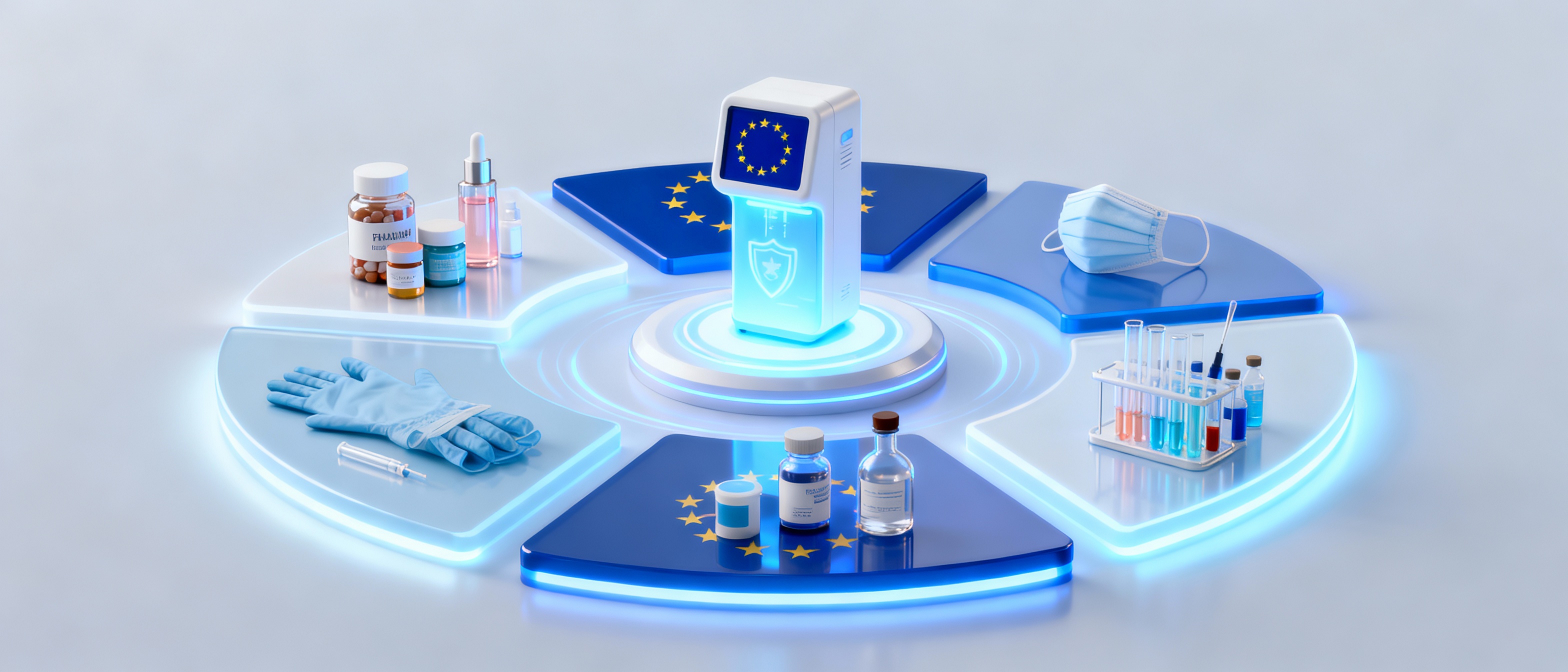
The document covers agreements concluded between Member States under the Borderline and Classification Working Group (BCWG) — an association of authorities from all EU member states - were made. This group works according to Helsinki process, a discussion process between authorities to resolve unclear cases.
When different EU countries interpret laws differently, public health can be endangered and the internal market distorted. The manual serves as a support tool for uniform decisions, but is not legally binding, but reflects the consensus of EU authorities and can be used as a reference by notified bodies and national authorities.
Article 4 of MDR Regulates the legal status of a product And makes it easier to clarify borderline cases when it is unclear whether a product should be classified as a medical device or an accessory.
What is the manual about?
(This is only an indicative summary and, in case of doubt, does not replace reading the original document, source see below)
That Manual on Borderline and Classification Is an official guide from the European Union that helps manufacturers, authorities and medical device professionals answer two critical questions:
- Is my product even a medical device? (qualification)
- If so, what is its risk class? (Classification)
Part 1: Medical devices in accordance with MDR (Regulation 2017/745)
What is a medical device?
According to EU Regulation 2017/745, a medical device is a product that is suitable for a Specific medical purpose Is determined and its main effect Not by pharmacological, immunological or metabolic means achieved.
1.1 Qualification: When is something NOT a medical device?
The biggest challenge lies in Demarcation to similar product categories. The manual aims to provide clarity through specific examples:
Distinction from medicinal products
Nasal spray with antibodies against COVID-19
- Antibodies bind to the virus and inactivate it
- Outcome: Not to be qualified as a medical device because the effect is immunological (therefore medicinal product)
Root canal irrigation solutions (with sodium hypochlorites or chlorhexidine)
- Manufacturers Claim: Purely Mechanical Flushing
- Outcome: Still class III because NaOCl and CHX have antimicrobial properties — unless the manufacturer can scientifically prove that this effect does not occur
Dual-action cream with menthol and capsaicin
- Menthol acts on TRP ion channels = pharmacological effect
- Outcome: Do not qualify as a medical device because the main effect is achieved through pharmacological agents
Lactose tablets for vaginal use
- Nutrient for lactic acid bacteria (metabolic process in the body)
- Outcome: Not as a medical device because metabolic agents are used
Distinction from cosmetics
Tooth Stain Remover with Micro-Grinding Effect
- Producers' argument: treats fluorosis stains, amelogenesis imperfecta
- Outcome: Still a cosmetic product because the purpose is aesthetic — whether mechanical or chemical, regardless of the consequences of illness
Distinction from PPE (personal protective equipment)
Covers for medical examination tables
- Purpose: ensure hygiene, prevent disease transmission
- Outcome: Class I medical device because of specific medical purpose (disease prevention)
Rescue bag for patient transportation
- Stabilizing and protecting patients during transportation
- Outcome: Class I medical device because compensation for a disability
Plexiglass box to protect caregivers
- Protects against exposure to droplets (e.g. during intubation)
- Outcome: NOT as a medical device, because it protects nurses, not patients
Distinction from general products
Mobile sterile air system
- Removes pathogens through filters and creates laminar airflow
- Outcome: NOT as a medical device because only the environment is controlled, does not act directly in/on the human body
Medical calculators (e.g. CHA₂DS₂-VASC score for stroke risk)
- Calculates clinical scores to support diagnosis/treatment
- Outcome: YES, medical device at least class IIa because information is provided for medical decisions
Needle counter for surgery
- Count needles and scalpels after surgery
- Outcome: NOT as a medical device because no specific medical purpose (censure/organization only)
Temperature sensor in scoliosis braces
- Tracks compliance (how long the device is worn)
- Outcome: NOT as a medical device and not as an accessory because the medical functionality of the corset is not directly supported
Smartphone app for STI prevention
- Shares test results between sexual partners, calculates risk of infection
- Outcome: NOT as a medical device because primarily communication/data exchange, risk is based on behavior not physiological parameters
Biocides, Foodstuffs, Textile Treatments
For these categories, the manual covers specific differentiation scenarios, which are summarized here due to their lower practical frequency.
1.2 Classification: Which risk class?
As soon as a product is medical device Is qualified, will it be one of Four Risk Classes assigned to:
- class I = lowest risk
- class IIa = medium risk
- class IIb = increased risk
- class III = highest risk
The classification follows 21 rules in Annex VIII of MDR. The manual gives specific examples of selected rules:
Rule 7 & 8: Implantable and Long-Term Devices
Dermal Fillers (Dermal Fillers Against Wrinkles)
- Injected under the skin, usually with hyaluronic acid, partially absorbable
- Outcome: Class II or III, depending on absorption time (Rules 7 and 8)
n-butyl-2-cyanoacrylate (NbCa) adhesives for venous occlusion
- Used for permanent endovascular occlusion of varicose veins
- Previous: Classification Depended on Absorption Time
- Result (new): ALWAYS class III, regardless of absorption time
Custom Skull Implants
- Replacement of Skull Parts, Sits on the Dura Mater (Outer Meninges)
- Outcome: Class III because in direct contact with the central nervous system — independent of biological action or interaction mechanism
Rule 9: Active therapeutic products with energy
Argon coagulation devices
- Generated argon plasma releases energy to body tissue (electrosurgical technique)
- Outcome: Class IIb because of potentially hazardous energy output in a therapeutic context
Rule 11: Software
Medical calculators (e.g. kidney function according to Cockcroft-Gault)
- Calculate score to determine kidney function and whether dialysis is necessary
- Outcome: At least class IIa (may be higher depending on clinical significance)
Reason: Software that is used to make diagnosis or treatment decisions qualifies as a medical device under Rule 11.
Rule 14: Products with an integrated drug substance
Root canal irrigation solutions with NaOCl or CHX
- Do drug substances contain known antimicrobial effects
- Outcome: Class III under Rule 14, unless the manufacturer scientifically demonstrates that the antimicrobial effect is irrelevant
Supplementary solutions for red blood cells with adenine
- Adenine (a drug substance) increases the shelf life of blood
- Outcome: Class III according to Rule 14 because medicinal products contain substances with ancillary (secondary) action
Regulation 16: Sterilization and Disinfection Equipment
Ethylene oxide (EtO) gas cartridges
- 100% EtO gas for sterilization of medical devices
- Outcome: Class IIa because specifically intended for sterilization of other medical devices
Part 2: In vitro diagnostics in accordance with the IVDR (Regulation 2017/746)
What is an in vitro diagnostic device (IVD)?
An IVD is a product that Analyzed samples derived from the human body (blood, urine, saliva, breath, etc.) to Information about physiological or pathological conditions to provide.
2.1 Qualification of IVDs
FeNO meter (fractionated exhaled nitric oxide)
- Measures NO levels in exhaled air to diagnose allergic or eosinophilic asthma
- Exhaled air = sample that comes from the human body
- Outcome: Qualified as an IVD in accordance with IVDR 2017/746
2.2 Classification of IVDs
IVDs are used in Four Risk Classes Divided:
- Class A = lowest risk
- class B = medium risk
- class C = increased risk
- class D = highest risk
Classification is carried out by 7 rules in Annex VIII of the IVDR. The manual notes that specific examples are still being developed by the BCWG under the Helsinki process.
Key Findings for Practice
The Standard of Proof: Who Bears the Burden of Proof?
The manufacturer must prove, not the authority:
- Does a manufacturer want to claim that their product “only works mechanically” even though it contains pharmaceutical substances → scientific proof required
- Does a manufacturer want to claim that their product is not a medical device → proof through scientific evidence is required
- Bare Information provided by the manufacturer is not enough — Only robust scientific tests count
The manufacturer's intent is not decisive
- A product with pharmacological action remains pharmacological, even if the manufacturer denies this
- The qualification is scientifically objective, not subjective
- Substance mixtures and mechanisms of action are evaluated according to scientific criteria
Medical purpose is central
- Aesthetic improvement = no medical purpose (e.g. teeth whitener)
- disease prevention = medical purpose (e.g. examination table covers)
- Environmental Control = no medical purpose on/in humans (e.g. sterile air systems)
- Information for medical decisions = medical purpose (e.g. computers, apps)
Special Attention: Borderline Products
Products that are often problematic:
- dental products (Distinction: aesthetic vs. therapeutic)
- Skincare products with active ingredients (Distinction: cosmetics vs. medical device)
- Software and apps (Distinction: pure data processing vs. medical decision support)
- Combination products (product + drugs + accessories)
- Implantable devices (contact with nerve tissue = almost always class III)
Resources and more information
- Official link: health.ec.europa.eu — MDCG documents
- Latest version: Manual on Borderline and Classification, Version 4, September 2025
- legal basis: Article 4 MDR (legal status of products)
- For IVDs: Article 3 IVDR + Article 47 IVDR
- Helsinki procedure: Process for clarifying cross-border products between member states
The Differentiation and Classification Handbook is an indispensable reference work for manufacturers of medical devices to correctly determine whether a device represents a medical device at an early stage of product development and, based on this, to select the appropriate classification and the scientifically based study design. Do you need an assessment or initial advice on the classification of your medical device or are you wondering whether you need a clinical trial or clinical trial? Contact Feel free to contact us for an initial consultation!
(as of September 2025)
Show the medical benefits of your product
With our many years of experience and expertise, we offer effective solutions to demonstrate the medical benefits of your product.
From the conception to the execution of preclinical and clinical investigations, we support you with customized services.
Find out how MEDIACC can help you achieve reimbursability for your products.